Ukrainian journalists expose corruption in wartime

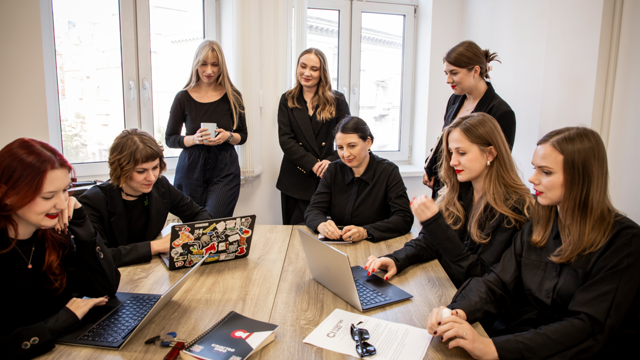
A group of young adults are gathered around a table in a meeting room, working on laptops and documents.

Together with independent anti-corruption agencies and civil society, a free and independent press plays a central role in the fight against corruption.

And the efforts are paying off. According to Transparency International, Ukraine has made progress in its anti-corruption work, even as corruption is rising globally. 

– We journalists continue to investigate corruption, even though there is a war. We scrutinise the authorities, the security services and the military, says Anastasiia Stanko, editor-in-chief of the investigative outlet slidstvo.info. 

Stanko recently visited Oslo in relation to The Norad Conference. She says that Ukrainians react strongly to corruption, and highlights the energy sector as a particularly sensitive area. 

Russia has deliberately targeted Ukraine’s energy infrastructure, leaving millions of people without stable access to electricity, heating and water for weeks at a time. 

– This is a new way of attacking us. They don’t only fight along the front line – they want us to freeze to death, Stanko says 

See the presentation delivered by editor Anastasiia Stanko at this year's Norad Conference.

– When you then hear that 100 million dollars have been stolen from the energy system – money that was meant to protect power plants – it is a shock, she adds, referring to Ukraine’s largest corruption scandal since the full-scale invasion in 2022. 

The case was uncovered and investigated by Ukraine’s own independent anti-corruption bodies: National Anti-Corruption Bureau of Ukraine (NABU) and Specialized Anti-Corruption Prosecutor’s Office (SAPO). Senior figures within politics and the energy sector are alleged to have diverted 100 million dollars – around one billion Norwegian kroner – for personal gain. Funds that could have gone to the state-owned energy company Energoatom. 

The revelations led to the dismissal of both the energy minister and the finance minister. In the aftermath, the head of the Office of the President also stepped down. 

Even in wartime, Stanko points to positive developments in the fight against corruption. 

– We have freedom of expression in Ukraine, even during the war. We are free to criticise the authorities, including President Volodymyr Zelenskyy. 

The editorial team at slidstvo.info focuses primarily on investigative journalism and publishes corruption-related stories every month. A dedicated group of journalists works full-time on these investigations, while the newsroom also reports from the front line. 

Protests led to change 

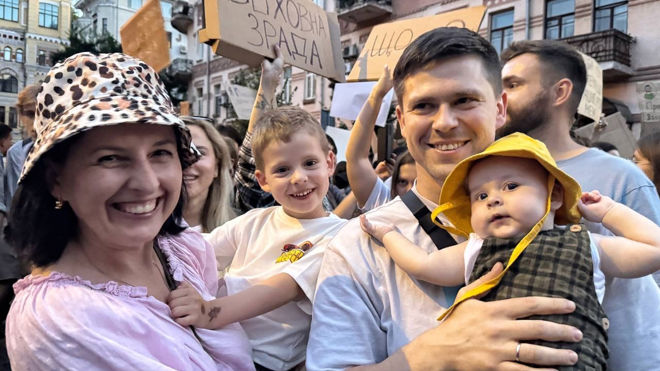
Civil society is strong in Ukraine. When a bill to weaken the independence of NABU and SAPO was introduced last summer, Ukrainians took to the streets in protest. 

A group of adults and children stand together in a crowd, with some people holding signs in the background.

Stanko herself brought her family along to demonstrate.

Photo: Privat

Stanko has worked as an investigative journalist for many years, including from the front line. Her message to Europe is clear: 

– Europe must continue to support Ukraine, even when corruption cases emerge. We are in the middle of a war, and Russia is responsible for that war. They invaded us, she says before she adds: 

– Europe must support civil society and media in Ukraine. That is how you can help ensure that money does not disappear into corruption. 

Investigative journalism in local newspapers 

At the local level, exposing corruption and countering disinformation is equally vital. Local media are closest to people and to the issues that affect their communities. Through the project «Stronger Together!», the Nansen Programme supports 40 Ukrainian local and regional  newspapers and digital news outlets through funding, capacity-building, mentoring schemes and peer exchange.

In a daily reality marked by war and uncertainty, independent media across the country have already demonstrated progress in their first year, and a strong commitment to defending independent journalism. 

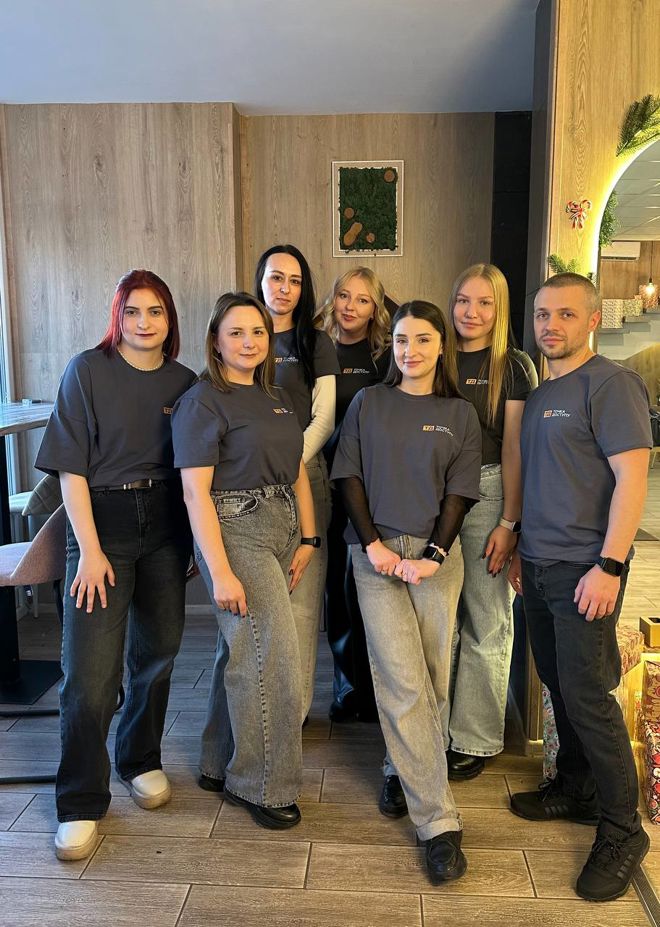
A group of young adults stand together indoors, all wearing matching dark t-shirts and jeans.

These local journalists are working to establish a new, independent news outlet focusing on investigative journalism and anti-corruption.

Ukrainian journalists take significant risks when exposing corruption. In Kropyvnytskyi – a city of 200,000 inhabitants – one of the city’s small, independent news outlets, Tochka Dostupu, published its fifth anti-corruption investigation. Shortly after publication, the young, predominantly female newsroom faced strong pressure from the owner to remove the corruption story. 

Rather than compromise their editorial independence, the entire newsroom of 12 journalists chose to resign in protest. Despite limited resources, these courageous journalists are already in the process of establishing a new local news outlet to continue their work with a focus on investigative and anti-corruption reporting.

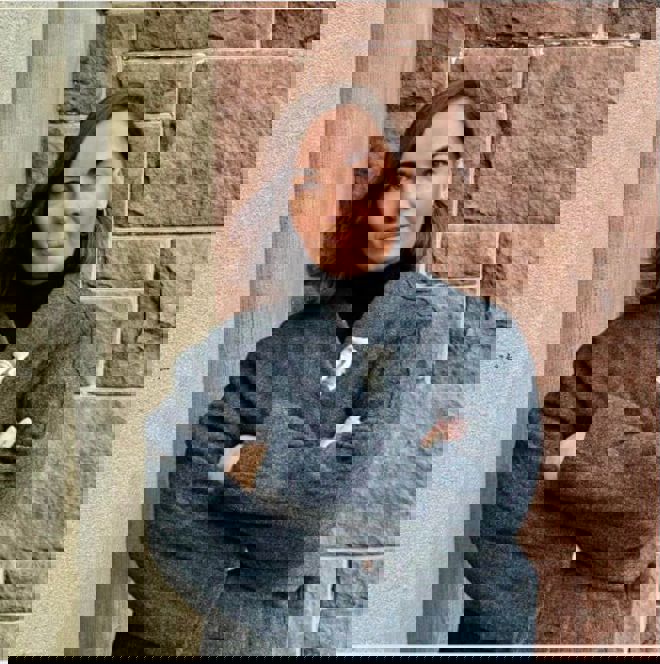
A woman with shoulder-length brown hair stands with arms crossed, wearing a dark coat in front of a brick wall.
This story underscores how important it is to build professional, resilient and ethically grounded teams that are capable of producing critical reporting, even under pressure.
Oksana Brovko
Head of the Association of Independent Regional Press Publishers of Ukraine (AIRPPU)
The project «Stronger Together!» is a collaboration between World Association of News Publishers, Mediebedriftenes Landsforening and AIRPPU. 

Norway provides broad support to media and journalists in Ukraine. Another important partner is the Institute for War and Peace Reporting (IWPR), which also helps strengthen knowledge and capacity within Ukrainian media to expose corruption.

Anti-corruption – a Norwegian priority 

Since 2022, Norway has provided more than NOK 37 billion in civilian assistance to Ukraine. The energy sector and humanitarian aid account for the largest shares of this support. 

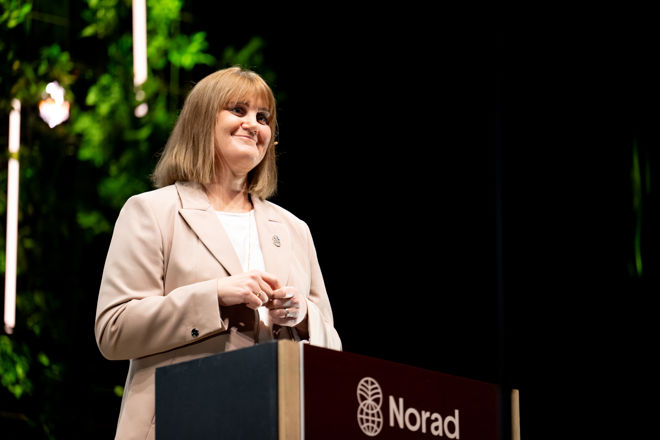
– Supporting Ukraine’s fight against Russia is a top priority for Norway. At the same time, we know that corruption is a major challenge. It is a risk we accept, even though we have zero tolerance for corruption. In wartime, clear requirements and consequences are even more important. Not supporting Ukraine is not an option, says Gunn Jorid Roset, Director General of Norad. 

A woman stands at a podium with the Norad logo, wearing a light-colored blazer and speaking at an event.

Gunn Jorid Roset at The Norad Conference 2026.

Photo: Fartein Rudjord/Norad

Norad has strong routines and control mechanisms to ensure that Norwegian funds are used for their intended purpose. 

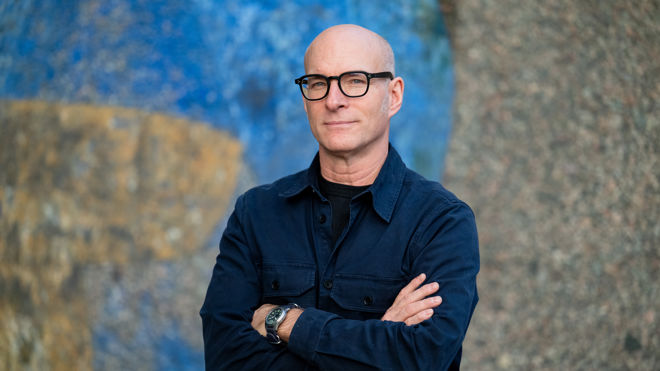
– Risk management is central to everything we do. We work systematically on prevention, detection and handling of corruption risk at all stages – from planning to reporting – while at the same time supporting Ukraine’s own anti-corruption institutions and civil society, says Mark Taylor, corruption expert in the Nansen Programme for Ukraine at Norad. 

A bald man with glasses stands with arms crossed, wearing a dark jacket in front of a textured, colorful wall.

Mark Beaumont Taylor, Senior Adviser in the department for the Nansen Support Programme for Ukraine.

Photo: Fartein Rudjord/Norad
Published 2/13/2026
Published 2/13/2026
Updated 2/13/2026
Updated 2/13/2026