We monitor and protect Indigenous rights within our territory. We take care of nature for future generations. That’s incredibly important.
Oé Kayapó Paiakan
Head of FUNAI
In the heart of the Amazon, authorities and Indigenous peoples are joining forces in the fight against illegal gold mining.
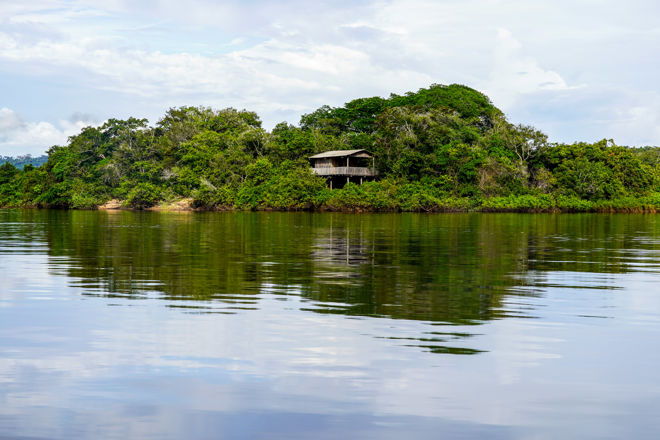
Kayapó Territory, Amazon, Brazil.
Record-high gold prices are putting pressure on the Amazon rainforest. Large international criminal networks are chasing gold, leaving behind destruction for nature, wildlife, and people in some of the world’s best-preserved forest areas.
In the Kayapó Territory, Indigenous peoples have lived in harmony with nature for thousands of years. Today, they are feeling the effects of illegal gold mining firsthand. During gold extraction, criminal networks use mercury – a toxic substance that pollutes rivers, destroys fish populations, and causes severe health problems.
– Why do young people get sick and die? Because of illegal gold mining. We are seeing serious illnesses that bring us down, says Bekwynhryre Kayapó, a grandmother born and living in the Kayapó Indigenous territory in the Amazon.
The grandmother, who lives with her grandchild, explains that deforestation has also led to higher temperatures — affecting life in their village near the equator.
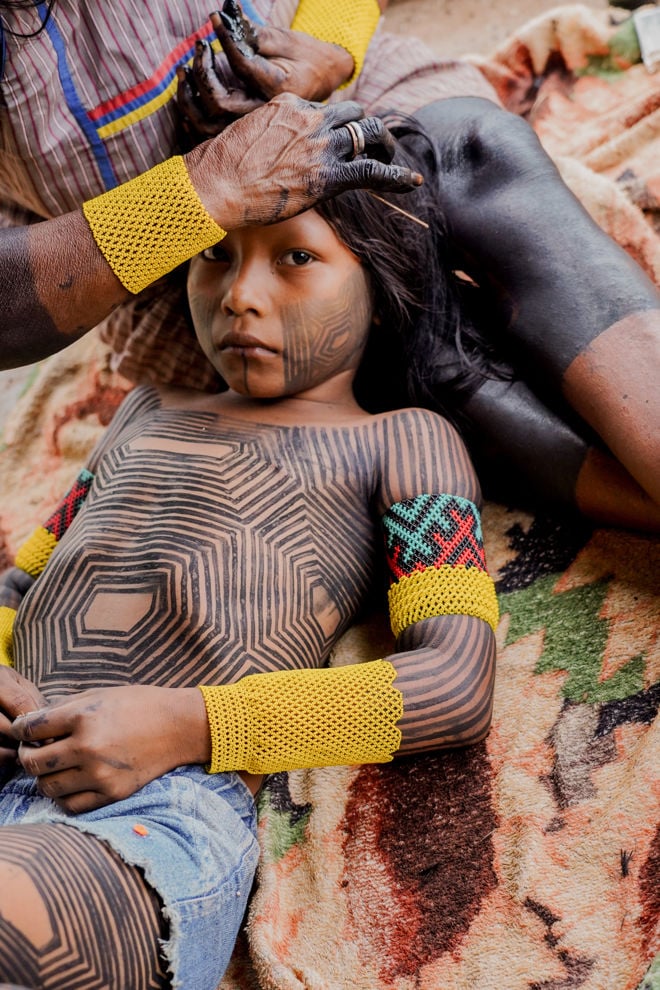
Irejakati Kayapo lives in the village of Madjàre, within Kayapo territory. She has been adorned by her grandmother for an important rite of passage.
Indigenous territories in the Amazon are among the most well-preserved forest areas in the world. The Kayapó area alone is three times the size of Belgium. Here, Indigenous peoples work closely with Brazilian authorities to protect both people and nature from illegal and criminal activity.
Oé Kayapó Paiakan, head of the regional Indigenous office of FUNAI, is herself from the Kayapó Territory in Pará. FUNAI monitors all activity in the territory, keeps a close eye on intruders, and coordinates actions with other government agencies.
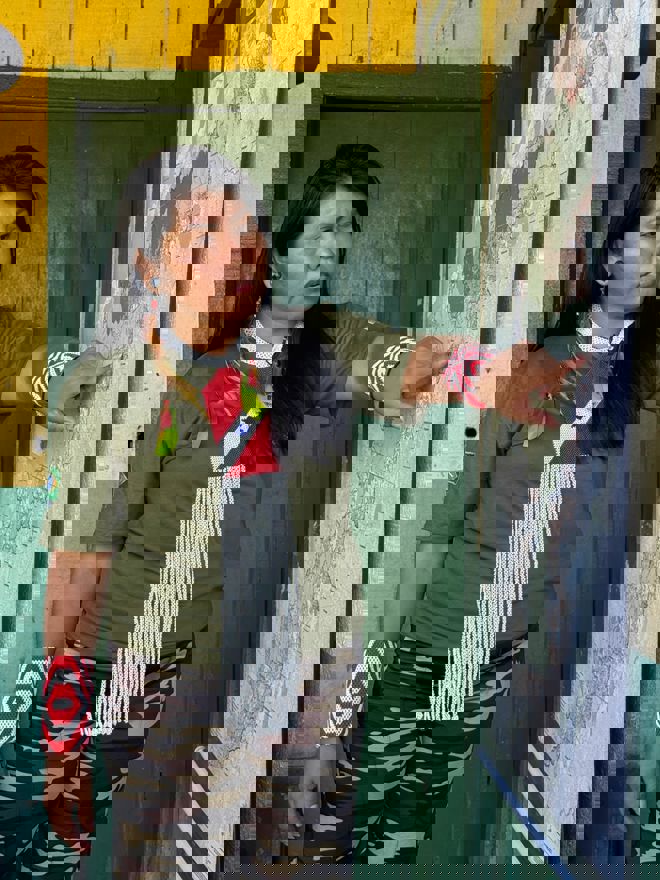
We monitor and protect Indigenous rights within our territory. We take care of nature for future generations. That’s incredibly important.
Through monitoring and cooperation, FUNAI has gained a good overview of where illegal gold mining is taking place. She emphasizes that illegal gold mining is a major problem. Particularly due to the heavy use of mercury, which causes great harm to people, animals, and nature.
– Illegal gold mining pollutes rivers and the fish that live there — the very fish we depend on for food, she continues.
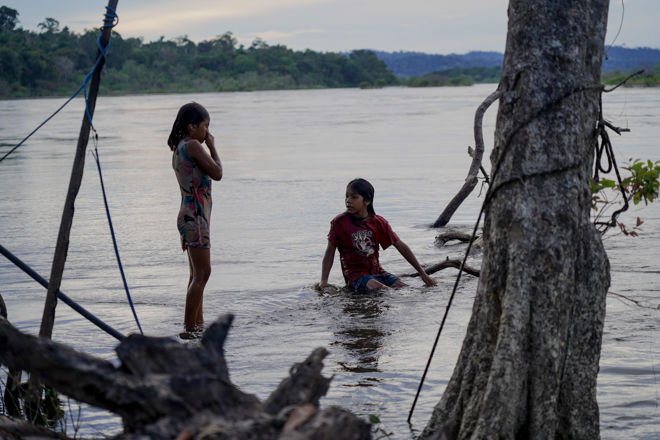
The Xingu River flows through Kayapo territory and plays an important role in the lives of the Kayapo people.
To prevent illegal entry, the Kayapó people have established 17 checkpoints, where they take turns patrolling and standing guard. One of the main bases is located on an island in the Xingu River and is led by Kaiti Kayapó.
– Before we built the base, illegal fishermen and gold miners entered our territory, but now the bases protect our river.
Kaiti Kayapó says the efforts at the base are paying off.
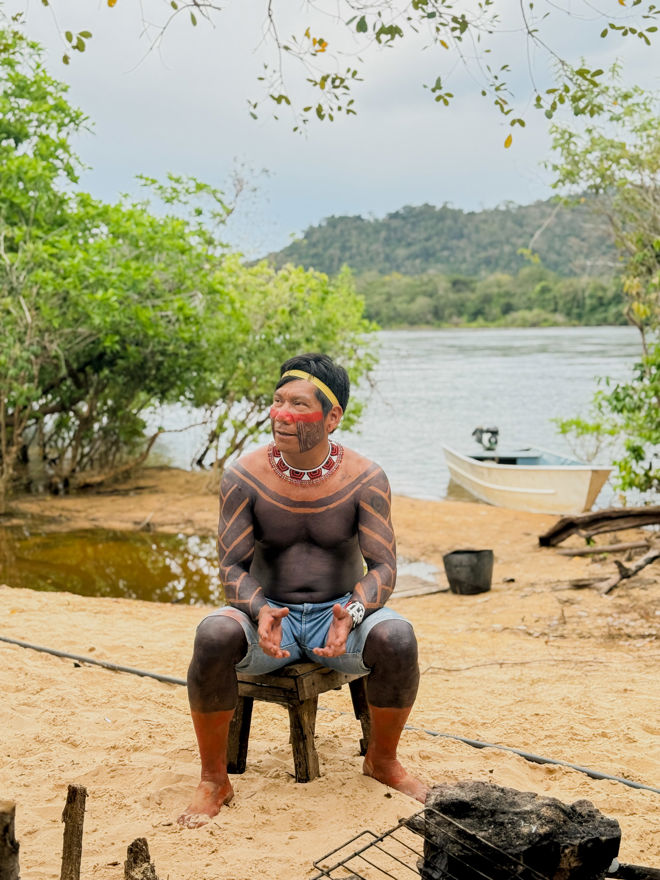
The fish have returned to the river, and we’ve started fishing again.
When they detect criminal activity or illegal intrusions, they alert authorities in cooperation with FUNAI.
The environmental police IBAMA enforce environmental laws in Brazil and are tasked with combating illegal activity in the Amazon. They crack down hard on illegal gold mines and organized crime.
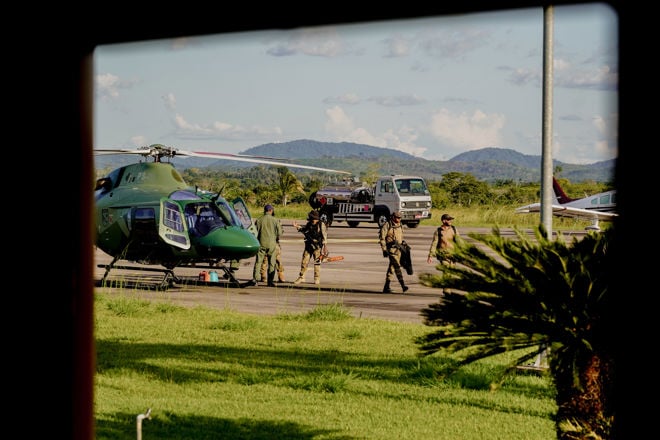
Ibama, Brazil's environmental police, is taking action against illegal mining operations in the Amazon. To reach the mines deep in the rainforest, they must use helicopters
– The Amazon is an enormous area, and in some places IBAMA is the only authority who can reach, says Alex Lacerda from IBAMA’s office in Belém.
IBAMA relies on helicopters to reach illegal mining sites during operations.
– When we arrive at sites where illegal gold mining is taking place, we destroy equipment to prevent them from continuing. We destroy camps, chainsaws, tractors, and excavators. This way, we stop them from exploiting resources, says Lacerda.
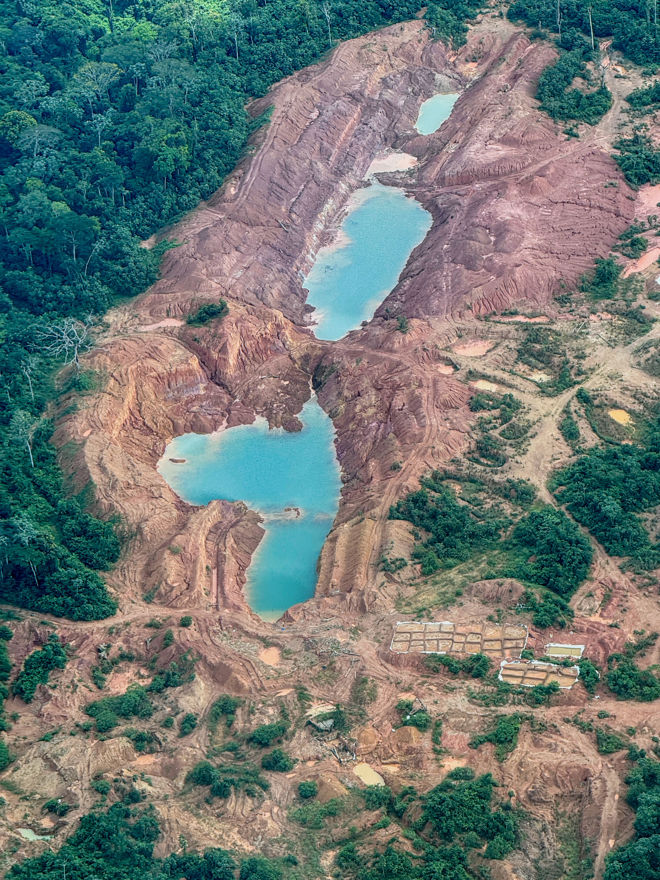
In the Indigenous Kayapo territory in the Amazon, more than 18,000 hectares of forest have been destroyed by illegal gold mining—an area equivalent to nearly 26,000 football fields.
For many years, Norway has supported Brazil’s efforts to protect the rainforest and Indigenous territories. The Norwegian rainforest initiative is coordinated by the Ministry of Climate and Environment, with Norad managing parts of the program.
– Preserving the rainforest in Brazil benefits us all. Large international criminal networks are behind the illegal gold mining, and we stand together with Brazil in this fight by supporting Indigenous peoples and authorities. In addition, Norway supports a stronger international effort against forest-related crime, says Norad Director Gunn Jorid Roset.
Norwegian support goes toward satellite monitoring, research, development, stronger law enforcement, and support for civil society.
See the film: A Shift in the Cattle Industry