Thank you to the Norwegian people. You have been our friends for many years. We now ask for flexible funding and direct support so that people can get help. Use your influence to stop this war.
Saddam Idris
ERR
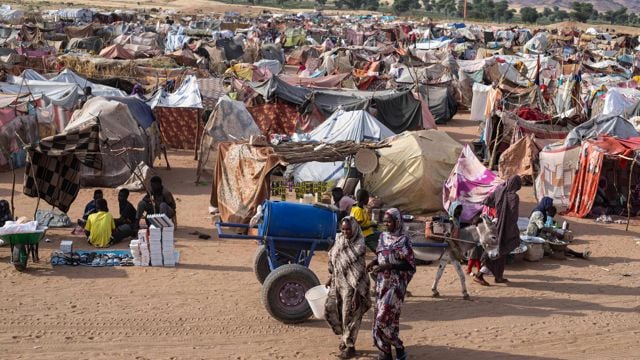
Displaced people in Sudan after the country’s second-largest city, El-Fasher, fell into the hands of the Rapid Support Forces (RSF) in early November.
In war-torn Sudan, local neighbourhood committees known as Emergency Response Rooms (ERR) are making an invaluable contribution to help their fellow citizens with water, food and health care. ERR brings hope when the world is at its darkest. Life is catastrophic for millions of people in Sudan.
– People back home are starving. They boil grass and sprinkle salt on it. They boil grass again and add salt. People eat leaves from trees to ease the hunger.
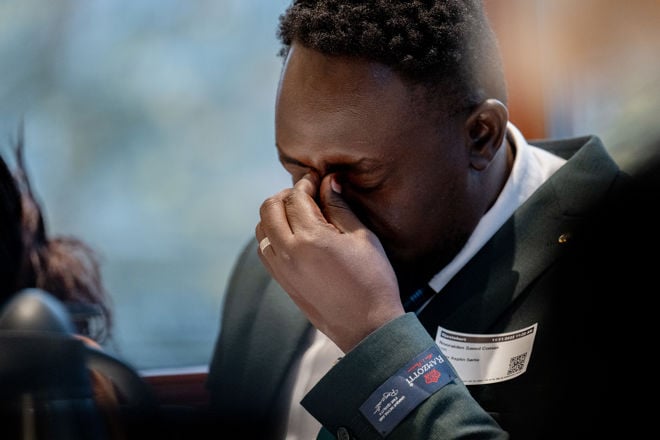
Coman from ERR had to take a pause after describing the horrific abuses that the civilian population, especially women and children, are subjected to.
The meeting room at Norad is quiet this November day. Representatives from ERR are meeting with people from various organisations and Norwegian authorities working on Sudan. ERR has been awarded the Rafto Prize. The stories of suffering they share are hard to comprehend – even for those who have worked with humanitarian crises for decades. Yet, they also speak about unity and hope.
– People ask me if I have hope. Before coming to Norway, it was hard to answer that question. Hope? But now, seeing how many people care, and how the world is opening its eyes because we received this prize – yes, I do have hope, says Coman from ERR.
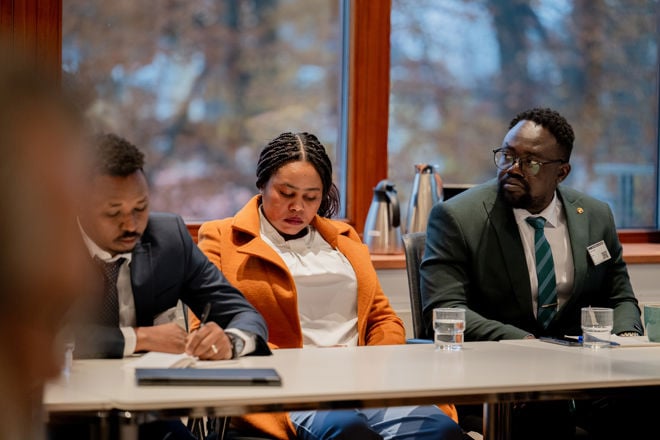
Emergency Response Rooms visited Norad to talk about their work.
ERR is a grassroots network established after the war in Sudan broke out in 2023. Thousands of volunteers cooperate through self-help groups to meet urgent needs, even as they themselves face the greatest risk of all: losing their own lives.
– We were volunteers even before the war. We are deeply democratic and work purposefully for change. As long as we live, we believe in democracy. We have lost many. It’s not easy. But we are brave and continue to fight for what we believe in, he continues.
In a country facing unimaginable hardship, ERR saves lives and stands up for human dignity. ERR provides health care, food and water, and supports survivors of sexual violence. They are present across Sudan, helping civilians affected by the conflict.
– ERR represents the power of people coming together when crises hit in the most brutal way. They risk their own lives to defend the most fundamental human right: the right to life, says Erik Abild, Director of the Department for Humanitarian Assistance and Comprehensive Response at Norad.
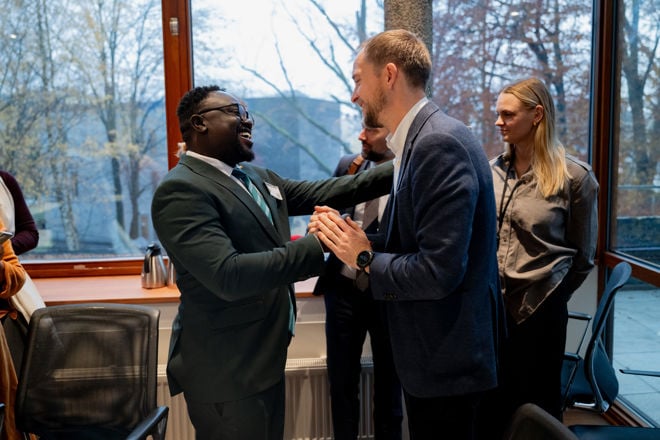
Coman from ERR and Erik Abild, Director of the Department for Humanitarian Assistance and Comprehensive Response at Norad.
Local leadership is essential for aid to reach those in need. ERR is present on the ground, doing everything possible to assist the most vulnerable. With their vast volunteer network, they reach many communities.
– In Sudan we share. We have a concept in our culture called Nafir. It means sharing what you have, whether it’s much or little. You share your tea with others. If you have little food, you still share it, explains Coman.
Sudan is currently the world’s largest humanitarian crisis. More than 30 million people are in urgent need of assistance. Over half of the population suffers from severe food insecurity. 13 million people are refugees or internally displaced, and around 640,000 are facing famine.
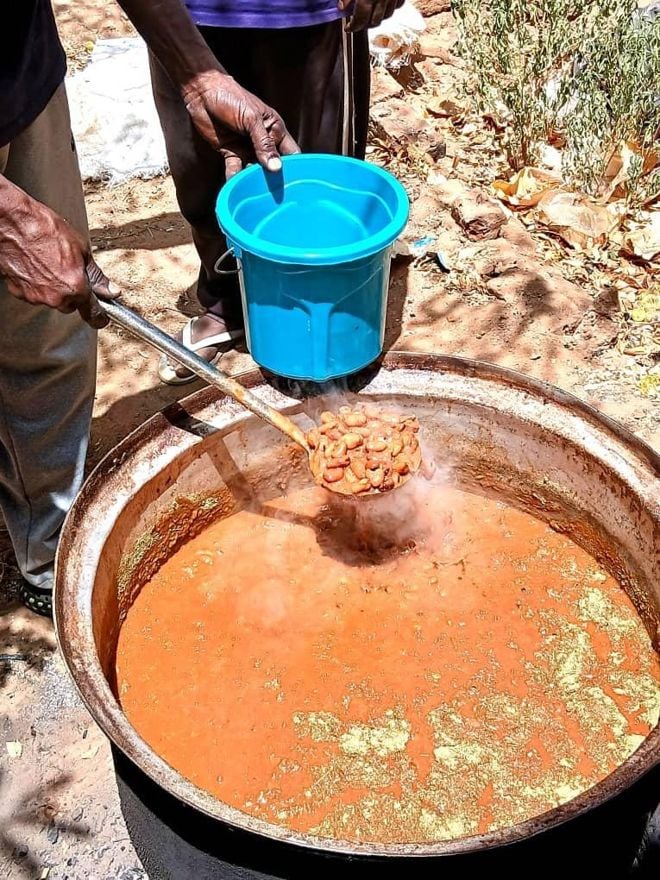
Thirteen million are refugees or internally displaced, and around 640,000 people are affected by famine.
Women pay the highest price. So do the children. When women are subjected to sexual violence, they need care and follow-up. Instead, they are sometimes rejected by their families for having brought them shame. The same happens to children. Abused children are cast out of their homes. Some women attempt to take their own lives after being raped.
ERR provides psychosocial support to those who have been excluded, offering food, water and shelter.
This autumn, Norway is providing an additional NOK 45 million in humanitarian support to Sudan. The assistance has been scaled up following intense fighting in and around El Fasher. In Darfur, there are reports of mass killings and large-scale sexual violence.
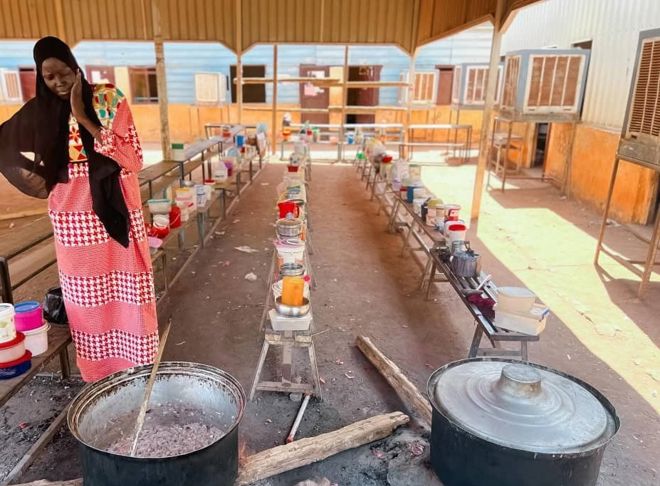
More than half of all people in Sudan suffer from severe food insecurity.
Of this support, NOK 25 million is channelled through the UN Sudan Humanitarian Fund (SHF), which enables humanitarian organisations to respond rapidly to the most urgent needs. Through such mechanisms, Norway indirectly supports local initiatives like ERR – especially in areas where international aid workers no longer have access.
Norway has been actively engaged in Sudan since the 1990s, continuing to seek peaceful solutions and to promote democratic development.
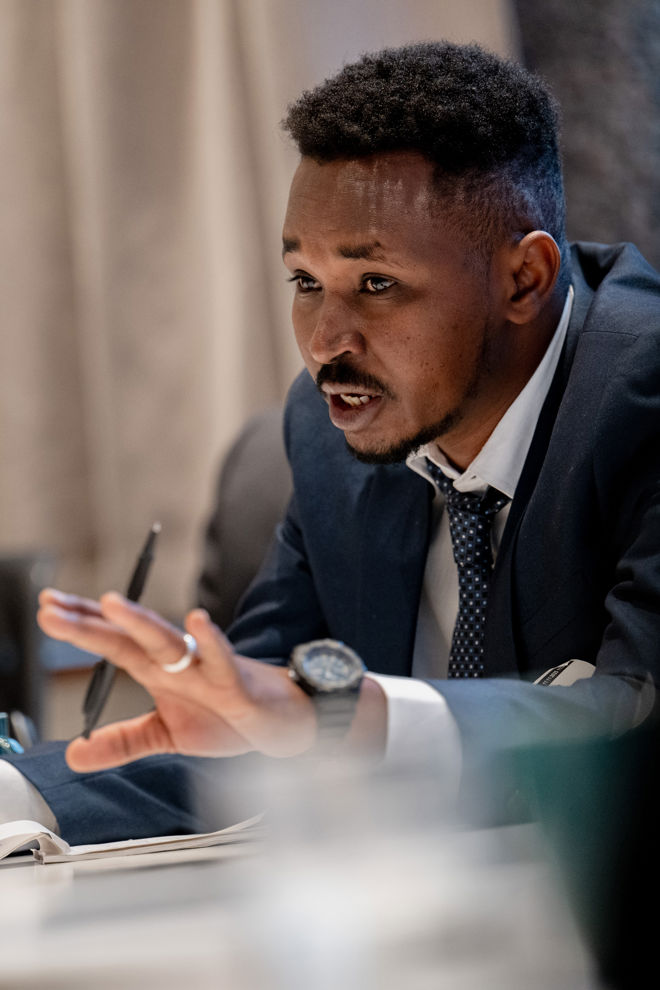
Thank you to the Norwegian people. You have been our friends for many years. We now ask for flexible funding and direct support so that people can get help. Use your influence to stop this war.
In 2025, Norway’s total assistance to Sudan amounts to approximately NOK 385 million. The main partners are UN agencies such as the World Food Programme and the Office for the Coordination of Humanitarian Affairs (OCHA), along with major Norwegian humanitarian organisations. Several are key supporters of ERR in different parts of the country.
Due to the war, much of Sudan’s state administration has collapsed. Hospitals have been destroyed and schools are closed. Millions have fled to neighbouring countries such as Chad, Uganda and Egypt.
Global cuts in aid have had severe consequences. The United States has withheld 1.3 billion NOK in funding, leaving 2.5 million people without the support they relied on.
How does ERR manage to find the strength when everything feels so dark?
– We keep our spirits up. We are motivated because the options are few. We are investing in a political future. We have no other choice.