Poverty is increasingly concentrated in countries where it is harder to achieve development.
Gunn Jorid Roset
Director General of Norad
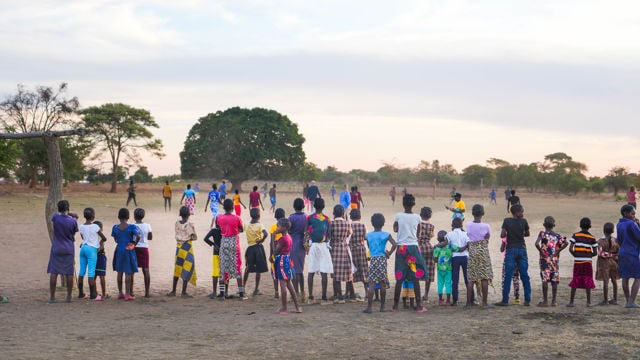
Children and young people gather to watch and play football in Jokwe Village, Zambia
According to Norad’s new poverty report, 1 in 10 people in the world have to manage to live on less than NOK 30 per day. Following many years of declining poverty, the trend has virtually come to an end.
– The fact that nearly 840 million people live on the absolute minimum is extremely serious. The picture is bleak, but not hopeless. The eradication of poverty is at the core of all aid. We are constantly working to ensure that the most vulnerable people are able to live full lives, says Norad Director General Gunn Jorid Roset.
Read the report (in Norwegian only)
In recent years, the challenges associated with poverty have worsened. The decline has come to an almost complete halt. Most of those living in extreme poverty live in the poorest and most unstable countries, particularly in sub-Saharan Africa. Here, 2 in 3 people live on less than NOK 30 per day. 21 of the world’s 25 low-income countries are situated in this region.
– Unfortunately, progress has slowed considerably in recent years due to the pandemic, inflation, more expensive loans, climate crises, war and increasing numbers of conflicts, says Roset.
Poverty is increasingly concentrated in countries where it is harder to achieve development.
More than half the population of sub-Saharan Africa are under the age of 20. By 2050, young workers between the ages of 15 and 24 is projected to increase by more than 70 million.
Economic growth has historically been by far the most important engine in reducing poverty.
– Growth is just as necessary as before, but it is less effective in countries where there are now high levels of poverty. Future growth must result in better business development and more job creation and, not least, the poor need to receive an education that enables them to get the new jobs. In today’s world, this is financially challenging. But it will have an enormous upside for sub-Saharan Africa, with its large youth population in an otherwise aging world, says Lars Loe, Development Economist at Norad and one of the authors of the report.
The report also shows that poverty has the greatest impact on girls.
– Girls from poor rural families are the most disadvantaged – they are more likely to marry early, leave education and have children before the age of 18. Poverty is passed on from one generation to the next. This is why it is important to ensure that aid benefits girls, says Gunn Jorid Roset.
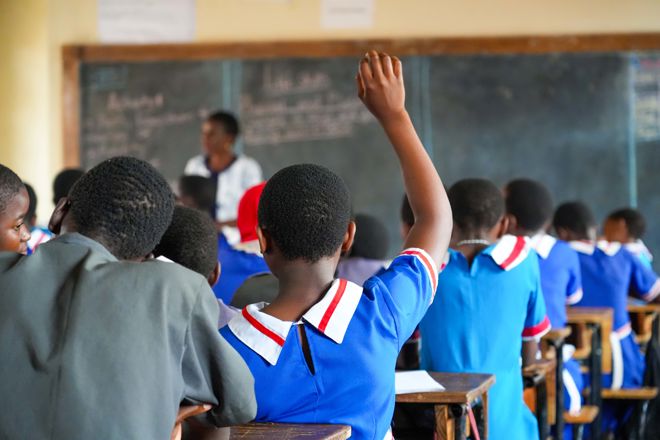
Chimutu primary school, Lilongwe, Malawi.
Norad manages most of the Norwegian aid budget. Many countries have drastically cut their budgets.
– In a world where aid budgets are under pressure, it is even more important to innovate to get more out of every penny. We need to establish new partnerships and collaborate with private sector stakeholders, Gunn Jorid Roset says.
The fact that there are more people living in poverty now compared to last year and the years before is mainly due to a change in how poverty is measured, not necessarily people’s living conditions having suddenly become worse. The threshold for extreme poverty has been raised from USD 2.15 to USD 3 per day.